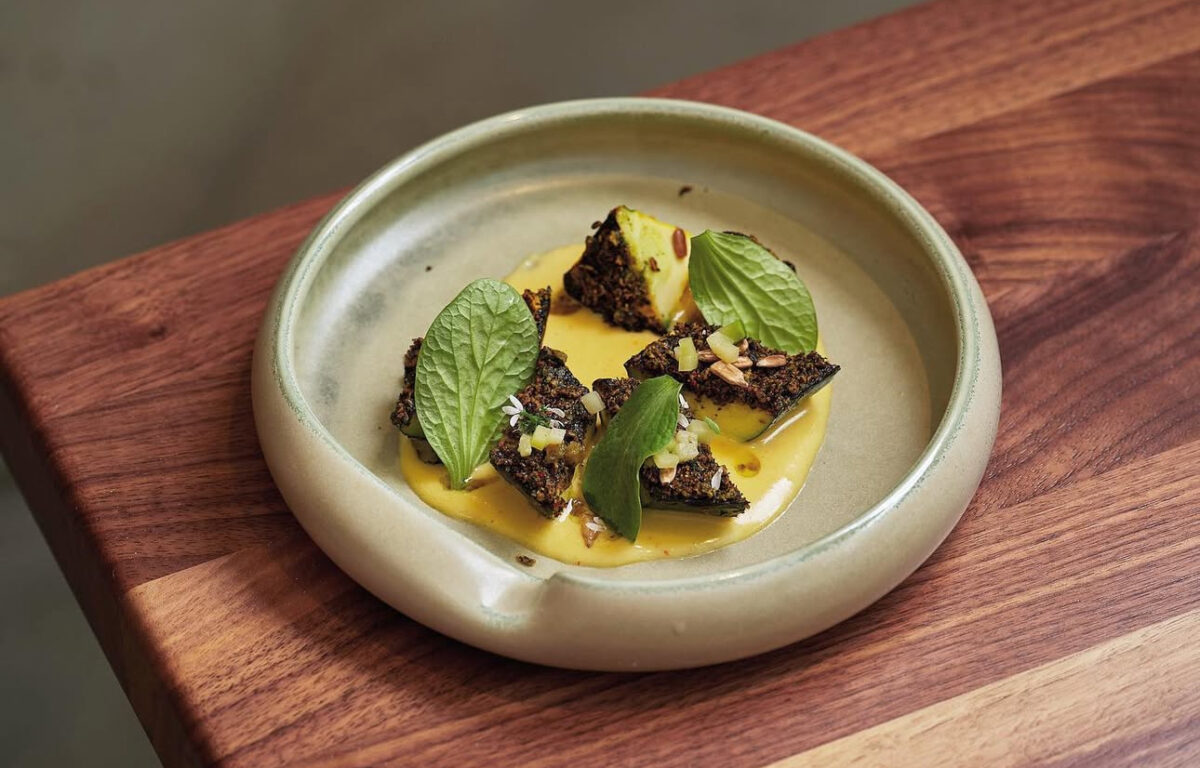

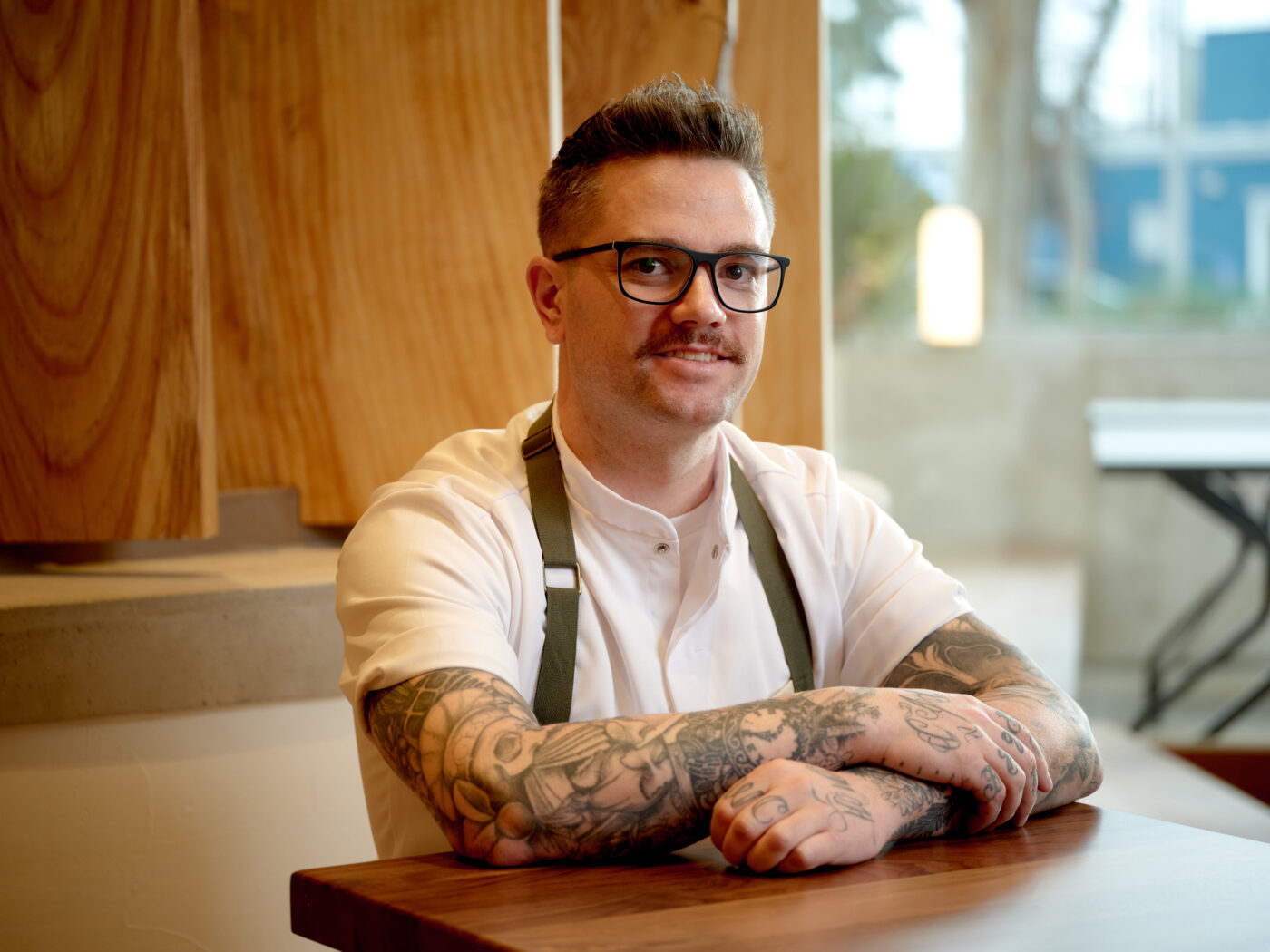
Chef Joel Hammond began his career in French and Italian cuisine before discovering a passion for Japanese ingredients. That curiosity led him through Momofuku and ultimately to training under Chef Morimoto, where he honed technique and tradition. At Uchi West Hollywood, he blends these influences through sustainable sourcing and an innovative in-house dry-aging program. Be sure to follow him on Instagram.
What key moments shaped your cooking philosophy and led you to Uchi WeHo?
I began my career deeply rooted in French and Italian cuisine. But once I discovered Japanese ingredients, everything shifted. Using classical French techniques alongside Japanese flavors opened an entirely new world for me. That curiosity quickly became an obsession, one that pushed me to dive deeper into the culture and the craft behind those ingredients. That journey took me to Momofuku under David Chang, where my fascination only intensified, and eventually to Chef Morimoto, who taught me the culture, discipline, technique and tradition of Japanese cooking.
What drew me to Uchi was the freedom, the ability to be as traditional or as non-traditional as I wanted. Uchi is built on the highest-quality ingredients with no creative limitations. We work with the best products we can possibly source, supported by an entire team of sharp, creative minds working toward the same goal: delivering the most thoughtful experience we can.x
For they dry-aging program, how are you approaching species selection, aging timelines, quality control, and guest education? Any standout dishes that best express the technique?
The dry-aging program here in West Hollywood is something I’ve taken on personally. It ties back to my early career working with aged beef, and after aging just a few fish, I couldn’t go back, the results were that much better. Now all of our fish is aged in-house. We distinguish between “maturing” and “dry-aged,” serving each fish at its ideal maturity. If it hangs past that window, it becomes a specialty dry-aged offering. Leaner white fish typically mature between 3 to 5 days. Fattier fish age longer: salmon hangs 5 to 7 days, or up to two weeks for our specialty dry-aged cuts. Our selection always starts with what’s sustainable and in season, exclusively sustainably farmed fish or hook-and-line caught wild fish. Never net-caught. If you want a single bite that embodies everything we do, start with the dry-aged Mt. Lassen steelhead trout nigiri. It captures the craft, the technique, the philosophy, and the obsession behind our work — all in one piece.
What steps have you taken to phase out single-use plastics—front and back of house—and what were the biggest operational hurdles/wins?
Currently we have phased out all deli containers in the restaurant. We now use mason jars and 1.8L bottles for product storage. We recycle milk crates from deliveries for walk-in freezer storage. Biodegradable trash bags. Take out has been the most difficult hurdle for us. All take-out items are boxed in recyclable paper products, even ramekins. Straws at the bar are agave straws. Plastic wrap and vacuum seal bags are pretty much the last items that we need to figure out a new solution for.
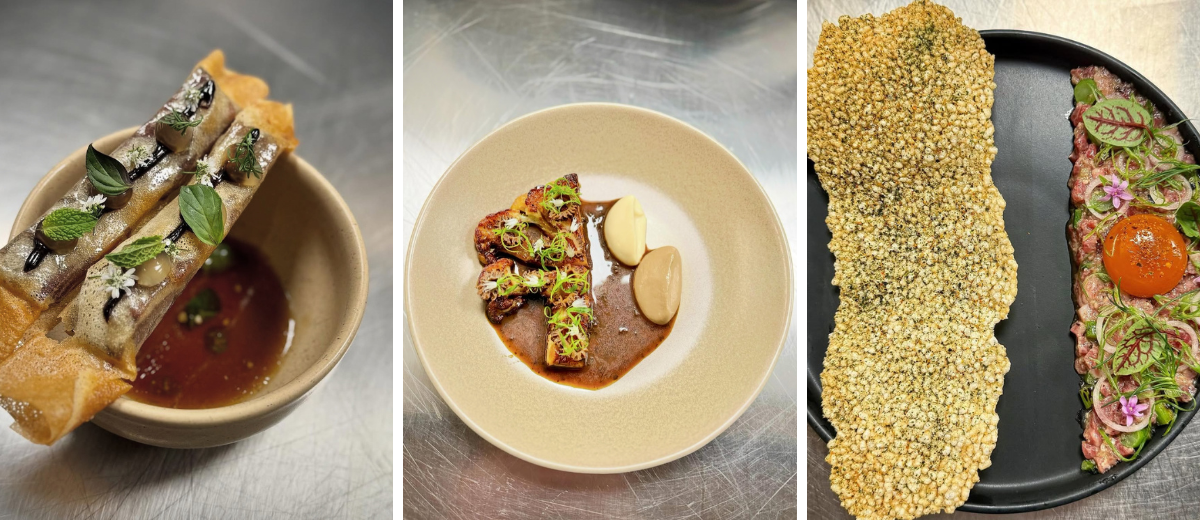
We hear you have a new rooftop garden in the works. What do you hope to grow first, how will it integrate with the menu and bar program, and who’s stewarding the garden day-to-day?
The rooftop garden is my next big dream/project for the restaurant. I am hoping to dive into this by this next growing season. I have some raised gardens at my home that I’m hoping to start everything in and slowly move over here. The goal would be to grow all our own micro greens and herbs, but also some more exotic items for new yakumi’s* on our nigiri pieces.
*small, fresh Japanese condiments or garnishes
From R&D to training and sourcing, what are the biggest benefits of being part of an innovative, multi-concept group? Where do you retain creative autonomy at the restaurant level?
The culture & core values of Hai Hospitality is what makes it all happen. When you have this much talent underneath one roof, the limit is as high as you all push each other to get to. With Hai Hospitality you have multiple restaurants all over the country all working on R&D and sharing with each other. Each location is a bit different though. Core menu items remain in place, but each restaurant is tailored to its market. For us in WeHo, we have the Santa MonicaFarmers market in our back yard, plus all the amazing fish/shellfish from the coast. Our specials page and fish selection tend to really revolve around what California has to offer!
You recently did three events in one week—including an out-of-town one. What does that demand operationally and personally? Any systems you rely on to keep standards high while protecting the team’s bandwidth?
Systems and structure, that’s what keeps everything moving forward. I always say that when you take every small detail seriously, the big things have a way of falling into place. Surround yourself with people who share your drive and your vision, and never forget to look out for one another, especially during those long, demanding weeks.
Looking ahead: Any upcoming dishes, collaborations, or initiatives you’re excited to preview?
Exciting things are in the works. Nothing I can reveal for now, but stay tuned. Big collabs coming soon!