
Chef Joseph VanWagner of Echelon Kitchen & Bar celebrates Michigan’s rich bounty through refined yet approachable cooking. Drawing from his roots in the state’s “fruit belt” and experience in top kitchens like Daniel, he blends fine-dining craft with heartfelt Midwestern hospitality. Be sure to follow him on Instagram.
Echelon Kitchen & Bar is described as a love letter to Michigan — what inspired you to create a concept so rooted in place?
I grew up on the southwest coast of Michigan in the “fruit belt,” an area that boasts the second-largest biodiversity in the country and produces everything from cucumbers to pawpaws in abundance.
Summers in the fruit belt were spent eating food straight from the garden and fishing on the big lake. During the colder months, hunting and preservation were a big part of the food culture.
I grew up immersed in a food system that has had a profound effect on me years later. After finding my way into some of the best kitchens in Chicago, I noticed how many Michigan farms appeared on menus, a stark contrast to the menus back home, which lagged behind Chicago in technique and ingredient quality. So naturally, after spending time traveling and experiencing food cultures around the world, I wanted to open a place dedicated to representing the bounty of delicious food that Michigan produces.
You’ve worked in fine-dining institutions like Daniel — how did that experience shape your approach to Echelon’s “elevated yet approachable” philosophy?
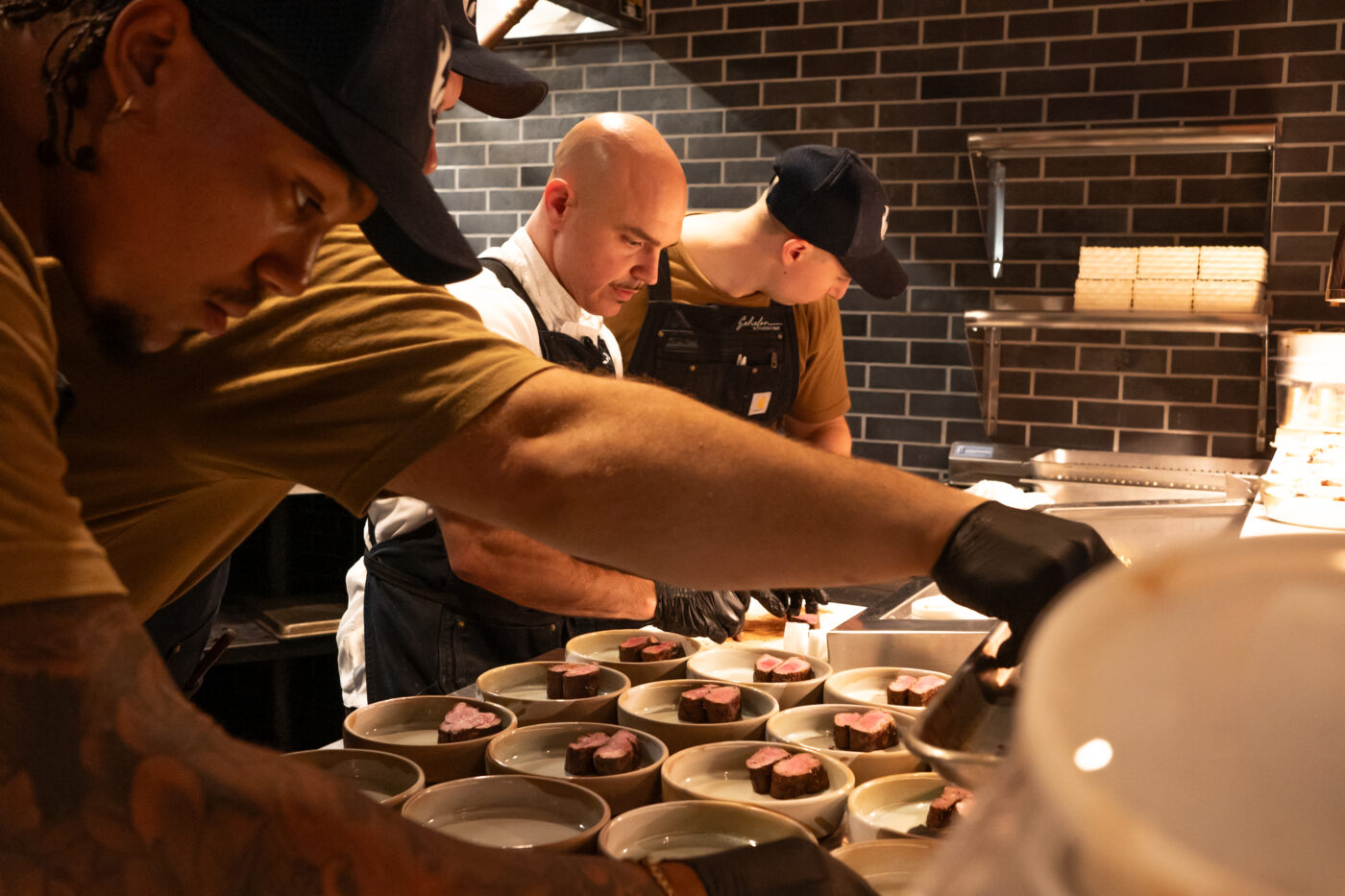
The biggest thing I took away from my experiences at elite fine dining restaurants was the care that went into every part of the work. Absolutely everything mattered in those kitchens, from how you treated the ingredients to how you communicated with the people around you.
We carry that same ethos into Echelon tenfold. Everything we do here matters. We know it, and we approach every task and interaction with care. One thing we say often is, “Everything worth doing is worth doing to the absolute best of your ability.”
With nearly all ingredients sourced within 50 miles, how do local farms and producers shape your seasonal menus?
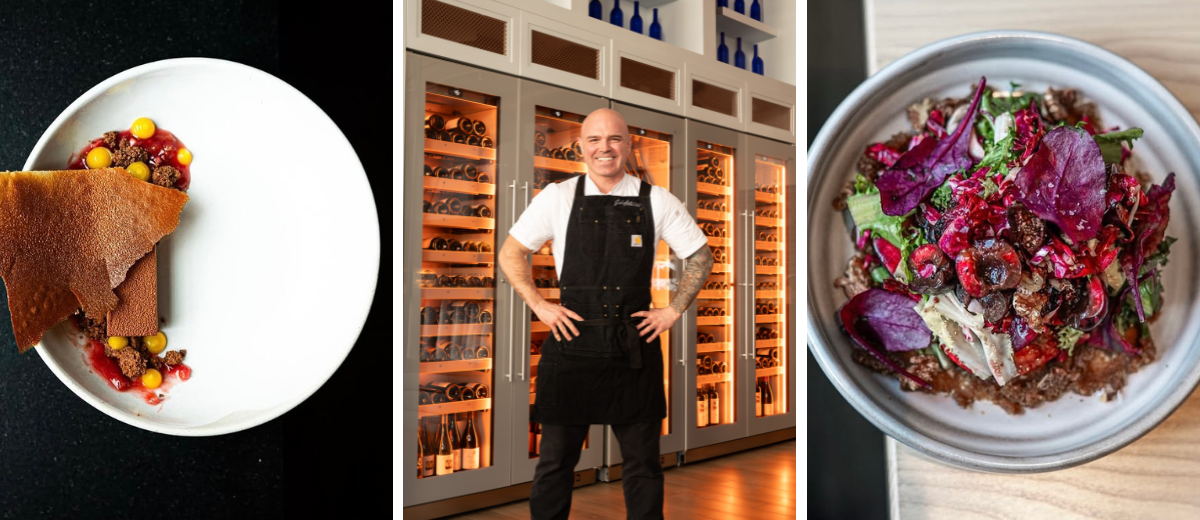
Local farms are the biggest factor in shaping our menu. Since we opened nine months ago, we’ve had 68 different menu items, all determined by whatever the farmers are growing at their best in that moment.
Our reliance on local farms has opened a new door of communication and collaboration, blossoming into a truly synergistic relationship and, honestly, the best food I’ve ever cooked.
Ann Arbor’s dining scene has grown tremendously — how do you see Echelon contributing to that evolution?
When we set out to create this project, one of the first things we did was define what Echelon meant to us. We landed on “a layer within a community.” I think Echelon embodies that within the dining scene, too. There are so many amazing, eclectic places, a few ingredient-focused restaurants, and some time-honored fine dining spots. We fit somewhere between all of those, but we lean heavily into locally produced, high-quality ingredients.
We also strive to present the highest level of culinary technique, the best possible service, and the most welcoming Midwestern hospitality, all in a relaxed, come-as-you-are setting. We aspire to be the neighborhood restaurant rather than just a special-occasion destination.
One of the things that makes Echelon unique is the thoughtfulness we bring to our team’s personal and professional well-being, something that’s been lacking in our industry for years.
We’ve created a series of team-member-inspired benefits, including our Team Member Well-Being Fund. Every day, we put 3% of all of our revenue aside and redistribute it to the hourly staff members at the end of each month. It acts as a small monthly bonus that can be used for anything from healthcare to education or savings. It’s one way we aim to positively impact the people who keep this industry going.
What’s one dish on your current menu that you feel truly captures the spirit of Michigan?
We honestly have so many dishes I love, but right now, I’m especially proud of our dry-aged duck. We dry-age the birds for two weeks before slowly grilling the breasts over Michigan fruit wood. The meat is then glazed with a vegetable molasses–tamari glaze made from our residual vegetable scraps, cooked down over a couple of days into an umami-rich syrup. We season the duck with a wildflower salt made from flowers we foraged and dried over the summer.
The duck is paired with a decadent parsnip purée, cones of shaved persimmon filled with a persimmon–verjus gel, crispy parsnip ribbons, and chervil. The plate is finished tableside with a rich duck jus seasoned with warm spices that evoke cold-weather comfort.
Every element of the dish comes from Michigan, and it showcases classic autumn ingredients. The browns, whites, oranges, and greens just scream fall to me, and as soon as anyone takes a bite, I think they’ll know they’re in fall-time Michigan.
Craft cocktails play a strong role in Echelon’s identity. How closely do the bar and kitchen teams collaborate on flavor development?
The bar and kitchen teams work hand in hand. Recently, we even based a tasting menu crudo on a drink our new bar manager, Max Schikora, created using Kapnick Farm apples and sesame oil. There’s a lot of crossover between the bar and kitchen in both ingredients and philosophy.
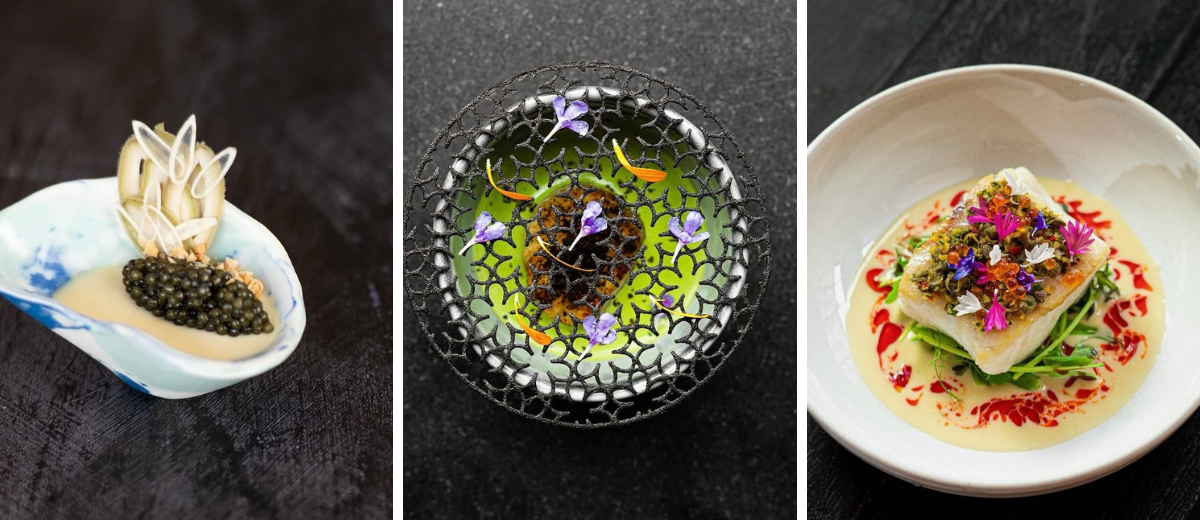
The bar has also become an outlet for zero-waste and sustainability. We make an oil from their spent citrus peels, then use it to brew a tea that we pour over dry ice beneath a bowl of crudo. When the dish goes out, it emits a beautiful citrus vapor that enhances the experience of eating this bright, cold crudo.
The bar also incorporates many of our kitchen elements. They use our syrups and even our vegetable molasses to sweeten an Old Fashioned. Having Max and a bar team so intuitive about flavor has opened up countless collaborative opportunities, and it’s made our food better. We’ve learned so much from them.
When guests dine at Echelon, what story or emotion do you hope they take with them when they leave?
I hope people leave here thinking, “This is what Michigan tastes like,” and “Wow, these people care so much about the work they’re doing.”
To be part of this community, to work in one of the most food-rich environments on the planet, to serve food to the people who grow it, and to do it alongside people you deeply respect is such a privilege. We love this work, and we’re so grateful to serve food to the community that makes it possible. I want people to feel that passion.