

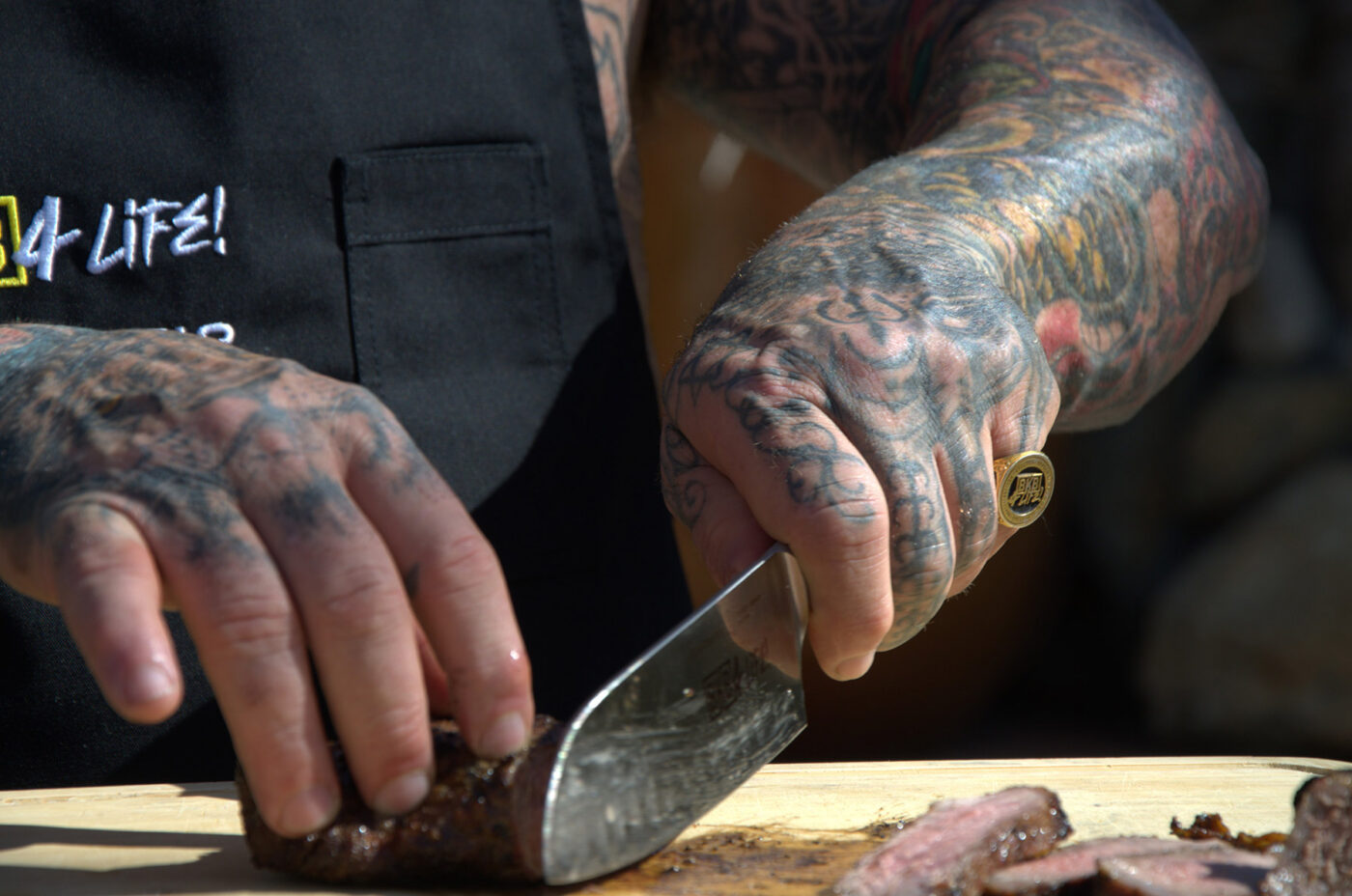
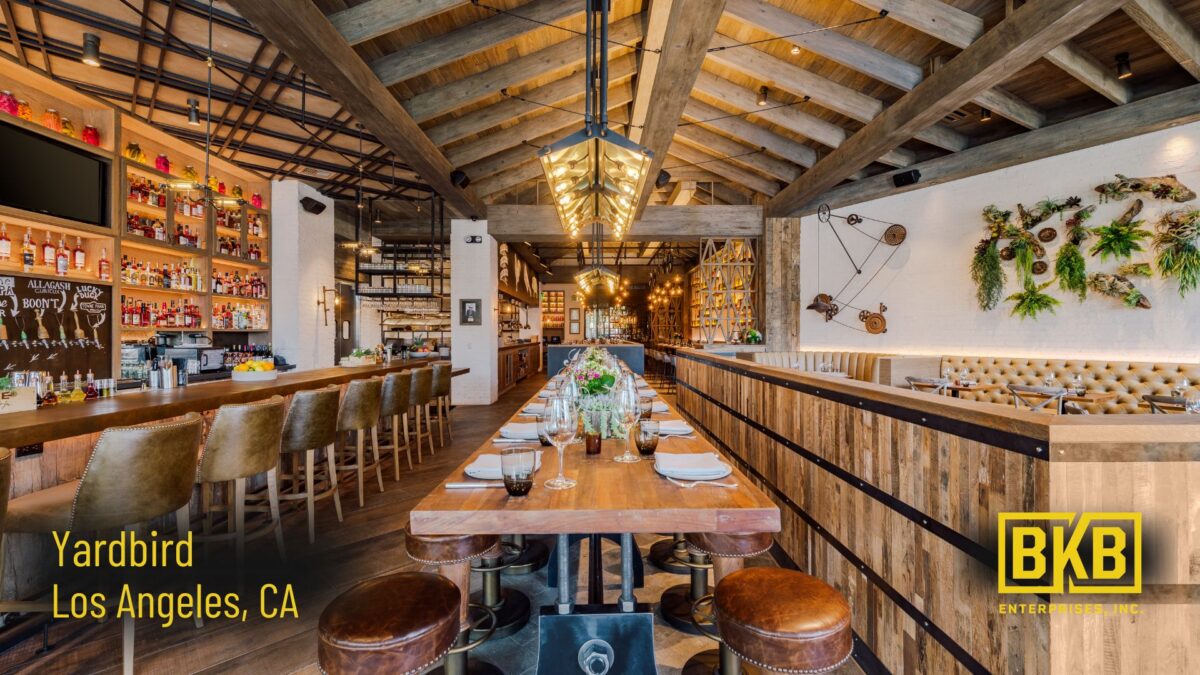
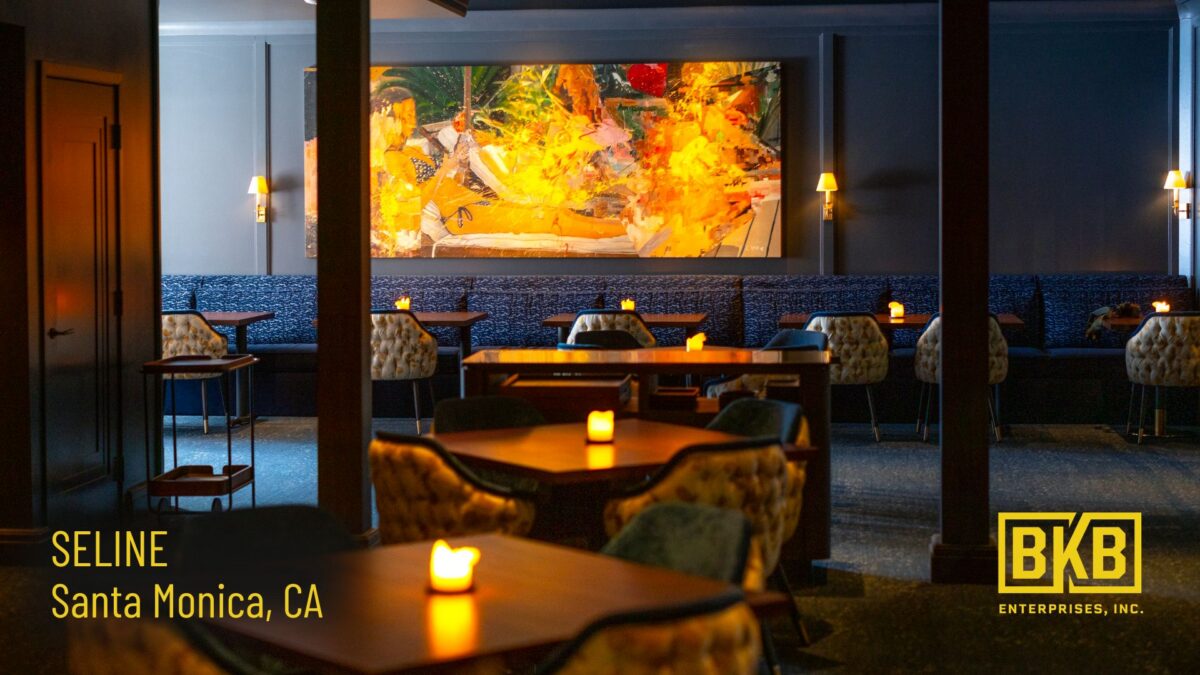
Brad K. Block is the founder and CEO of BKB Enterprises Inc. BKB builds the spaces where great culinary experiences come to life. Specializing in restaurant and hospitality construction, BKB partners with chefs, restaurateurs, architects, and designers to turn ambitious concepts into expertly executed spaces, from fast-casual concepts to some of California’s most celebrated fine-dining destinations.
The first one was my scalp.
I was seventeen. I had decided to leave my family’s house and I wasn’t going back. I wanted something on my body to mark the day, and I put it under my hair, on my head, where my mother would never find it.
She was Jewish. I’m Jewish. You’re not supposed to have any. Leviticus is not vague about it, and there’s a story that gets passed down in our families that a tattoo keeps you out of a Jewish cemetery — it isn’t true and it never was, but it worked on generations of us anyway. It kept people clean. It kept my mother worried about the right things.
So I put it where the hair grows.
I’ve had thirty-four years to think about that. At the time it felt like getting away with something. Now I think it was the most honest thing I could have done. I wasn’t ready to fight my mother. I was ready to leave. So the mark went somewhere only I knew about, on the week I stopped being somebody’s kid.
That was a private contract. Everything since has been the same contract, just written where people can read it.
Nobody had tattoos then.
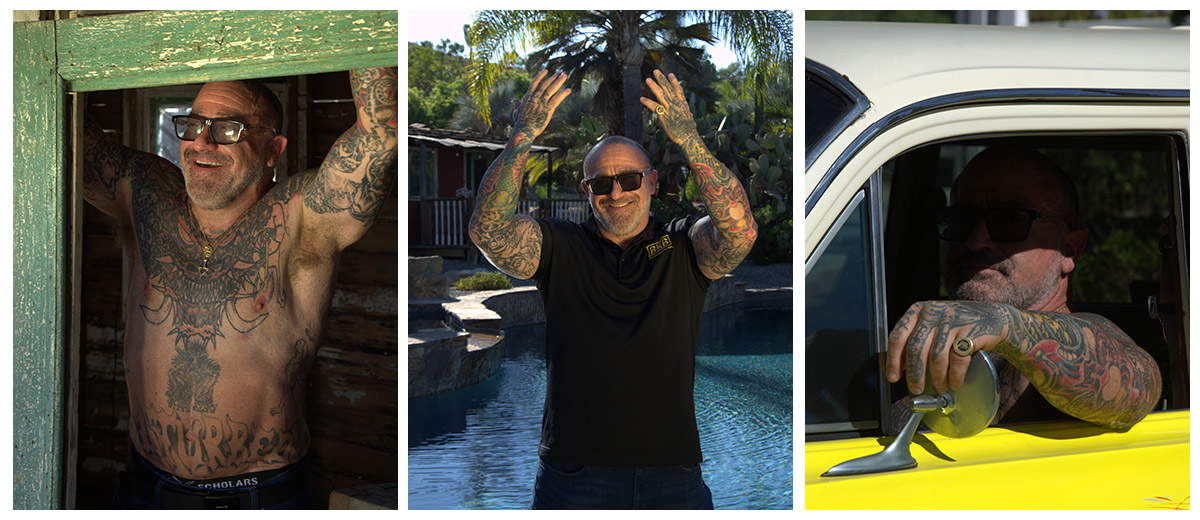
Sailors had them. Bikers. Guys who’d been inside. The outcasts and the bad boys — men who had already been sorted out of polite company and had stopped pretending they wanted back in. Your dentist did not have a sleeve. Nobody’s account executive had knuckles.
I got them anyway. And I kept getting them, in places that were going to cost me.
I want to be honest about why, because it wasn’t a plan and it definitely wasn’t marketing. It was a filter. If you were going to judge the book by its cover, I didn’t want any part of you. That was the rule and I never broke it.
It cost me. It cost me jobs and rooms I didn’t get invited into and a certain kind of comfortable I watched other guys have. What it bought me was clarity, early. By twenty- five I already knew who was going to look me in the eye and who was going to look at my hands. Most men spend a whole career trying to figure that out. I knew it walking through the door.

Meanwhile I was learning how to build.
Restaurants are their own animal. Anybody can put up walls. A restaurant has an opening date tied to a lease commencement, a liquor license hearing, a hiring class, and a press launch, and that date does not move because a millwork shop is behind. There’s a chef who will rethink his whole line in month four because he finally cooked in the space. A designer who specified a stone from one quarry and will not take a substitute. An inspector who decides whether anybody eats.
I learned it the way you actually learn it, which is by getting hurt on jobs and paying attention to why.
At thirty I started my own company.
High-end brands. Celebrity chefs. Mom-and-pops who saved for eleven years and put every dollar of it into one room. All of them handing me the most important thing they own and asking me to open it on time.
People assume the big names are the pressure. They’re not. A group with twelve concepts can survive a bad opening. A couple with one restaurant cannot. I carry those differently and I always will.


Here’s the part I don’t usually say out loud.
The ink didn’t come evenly. It came in seasons. You can read the hard years off my body like rings in a tree.
When something in my life was breaking — and it broke, more than once — I went and got worked on. I’ve heard people call that self-destructive. It has never once felt that way to me. It’s the opposite. It’s spiritual, and I mean that seriously, not as decoration.
When you’re carrying something that has no shape to it, nothing you can get your hands around, sitting still for six hours while somebody puts something permanent into you is one of the only ways I’ve ever found to give it a form. You go in holding something with no name. You come out with it drawn on you. It’s still there. But now it’s outside of you, and you can look at it, and it’s finished.
There’s an old idea in Judaism that your body isn’t really yours — it’s on loan, and you’re meant to give it back the way you got it. I understand exactly where that comes from. I’ve just never been able to square it against what the ink has actually done for me, which is keep me here. So I hold both. A lot of us hold both.

Covered head to toe, and three people have ever been allowed to put something permanent on me.
Three. In thirty-four years.
That number surprises people. They assume this much work means a hundred shops and a lot of Saturday afternoons. But permanent means permanent, and I’m not handing that to somebody because their shop was open and I was in the mood. Those three know my body, they know what’s already on it, and they know what I’m going to want in ten years better than I do. They’ve earned the right to make a decision about
me that can’t be undone.
That’s the same standard I use to hire, and the same one I use to award a subcontract. Find the small number of people who are truly excellent, give them real trust, and stop shopping. Most of what I know about running a company I learned sitting in a chair getting worked on.

It’s 2026 and everybody has tattoos.
Your barista. Your accountant. Your kid’s teacher. The banker approving your loan has a full sleeve under the dress shirt.
The thing I chose specifically because it would put me on the outside is now so ordinary it doesn’t mark anybody as anything.
I’m not bitter about it. I like it. It means the filter worked. I ran it for thirty years, I sorted out everyone I needed to sort out, and I built a life with the people who passed. It can retire now. It did its job.
And something happened along the way that I never engineered: the thing that was supposed to cost me became the thing nobody forgets. I walk into a room with a restaurant group and I’m the one person they can still describe six months later. Not because of the ink — because the ink makes them actually look at me, and once they’re looking, I’ve got thirty years of knowing exactly how this building goes together.
The tattoos get me looked at. The work is what closes.

I think of myself as the illustrated man.
Every mark is a year, a fight, a decision, a person, or something I survived. There’s no part of me that’s blank and no part of me that’s an accident.
Fifty-one years old. Still building rooms where people are going to have the best night of their lives, across Southern California, Northern California, and Arizona. Helping shape this industry one project at a time.
It’s the BKB Way.
BKB 4 LIFE!
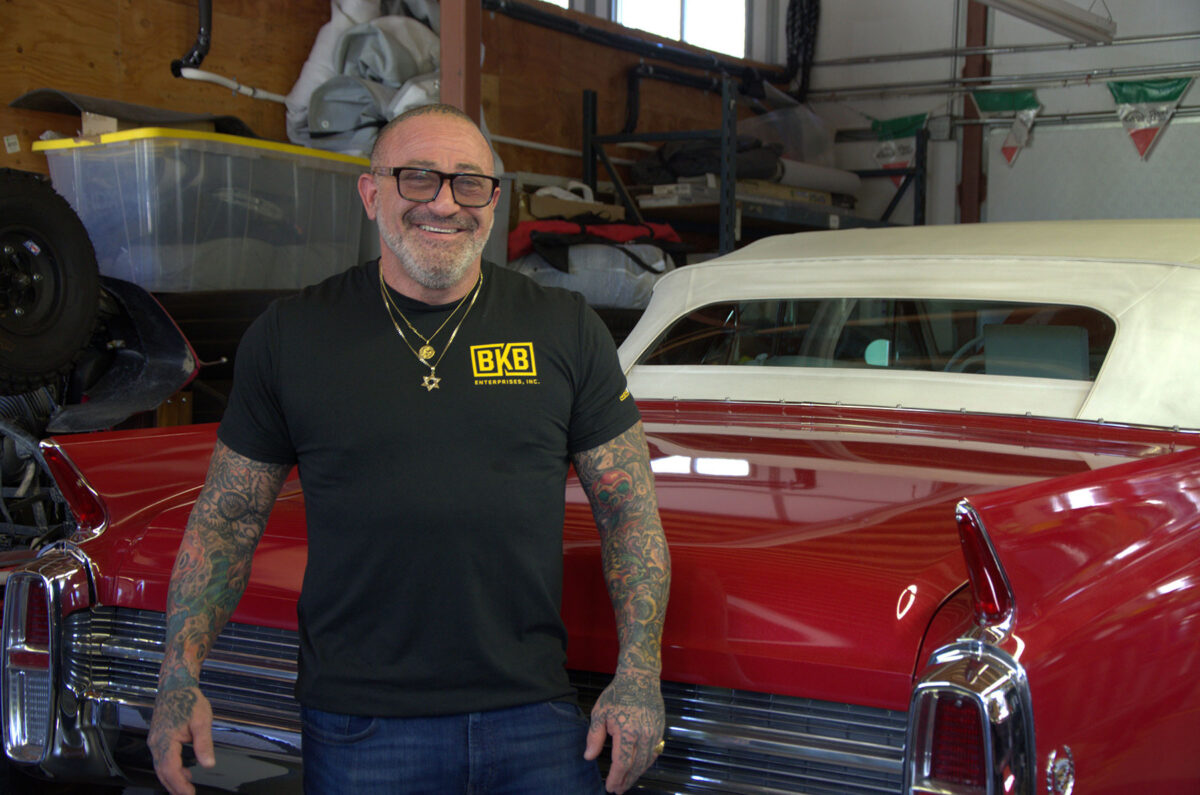
Portraits of Brad Block by Jade Barron