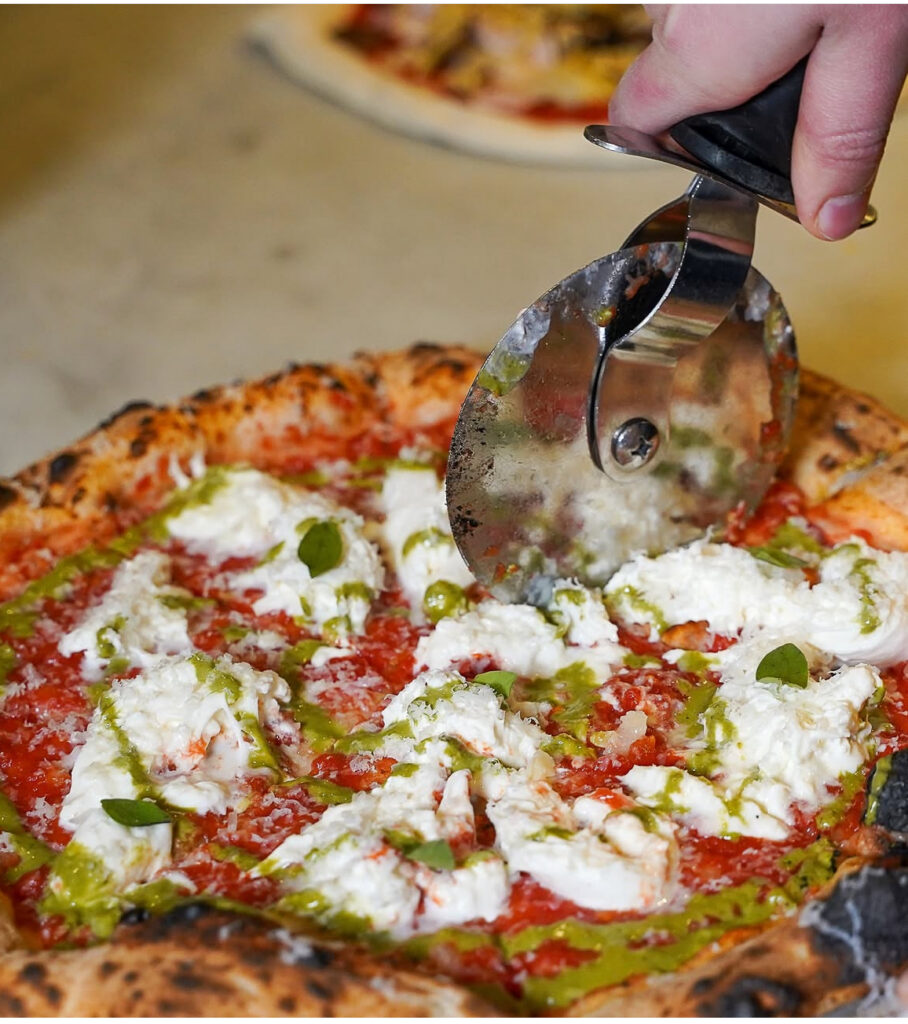


For Chef Giorgia, pizza is both craft and calling. Rooted in Neapolitan tradition and shaped by life in New York, she has built a career defined by passion, perseverance, and purpose. Whether behind the pizza station or mentoring the next generation, Giorgia proves that great pizza is about more than technique. It is about creating connection, sharing culture, and inspiring others. Be sure to follow her on Instagram!
You often say that “making pizza is my yoga.” What is it about the craft that brings you that sense of focus, balance, and fulfillment?
Pizza is my yoga. Making great pizza demands complete presence. When I’m stretching dough or standing in front of the oven, everything else fades away. There are no distractions, just the ingredients, the process, and the moment. It becomes a form of meditation.
Pizza also teaches patience, consistency, and humility. The dough is alive, and every day it behaves a little differently, so you have to learn to listen, adapt, and respect the process. No matter how hectic life gets, whether it’s running a restaurant or raising two kids under three, stepping behind the pizza counter always brings me back to center.
Growing up in a family deeply rooted in Neapolitan pizza-making, how did your father’s legacy shape your own identity as a pizzaiola, and how have you made that tradition uniquely your own?
My father certainly inspired my journey, but our relationship was never a traditional teacher and student dynamic. When I started making pizza in his first pizzeria in New York, I learned by watching. I often say that I “stole with my eyes.” I paid attention to every movement, every decision, and every detail, then stepped in and learned through experience.
Later, I had the opportunity to train in Naples with some of the most respected pizzaioli of that generation. The learning process was much the same. No one hands you a manual. You learn through observation, repetition, mistakes, and persistence. Mastery comes from showing up every day and refining your craft.
The deepest traditions I carry with me come from my family, especially my grandmothers. Sunday lunches were sacred in our home. Watching them cook taught me that food is about far more than technique. It is about hospitality, patience, generosity, and the connections created around a table. Those lessons have shaped me as profoundly as anything I learned in a pizzeria.
Today, I honor those traditions while bringing my own voice to the craft. As a woman, a business owner, a mentor, and a pizzaiola in New York, I have come to understand that tradition is not something frozen in time. It is something we live, nurture, and pass on. Each generation adds its own perspective, ensuring that the spirit of the craft continues to evolve while remaining rooted in its history.
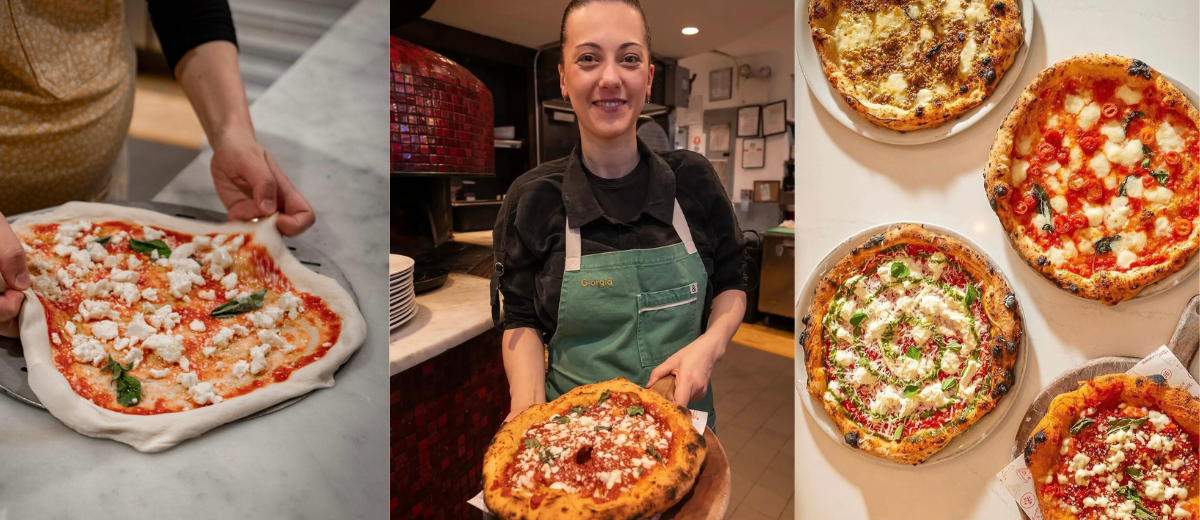
You made history as one of only two women to win first place in the Classic Pizza category at the International Pizza Competition in Naples. What did that moment mean to you personally, and what impact has it had on your career since?
To be honest, I did not fully appreciate the significance of that win at the time. I had only been making pizza professionally for three or four years and lacked the experience to truly understand what it meant. More than anything, I was surprised.
Winning in Naples was both incredible and deeply emotional because it is the birthplace of pizza and a place that holds immense meaning for anyone devoted to the craft. At the time, there was also far less attention surrounding these competitions. Social media was not what it is today, and the spotlight felt much smaller.
Looking back, I realize how fortunate I was and how important that moment became in shaping my career. It was the first time I truly believed I could excel in this profession. Years later, I value that achievement far more than I did then, not because of the title itself, but because it gave me the confidence to keep pursuing my passion and growing as a pizzaiola.
In an industry where pizza-making has traditionally been viewed as a male profession, what challenges have you faced, and how have those experiences fueled your advocacy for women in pizza?
When I started, I never thought about being a woman in pizza. I simply wanted to make great pizza and dedicate myself to the craft. As my career grew, I realized I was often one of the few women in the room and sometimes had to work harder to earn credibility. What kept me going was my passion for the work and my desire to be judged by the quality of what I do. Today, advocacy is important to me because I want other women to know there is a place for them in this industry. Whether in the kitchen, ownership, or leadership, the opportunities are there for those willing to pursue them.
As both an ambassador for Women in Pizza and the recipient of the Empower Women Award, what changes have you seen in the industry, and what still needs to happen to create more opportunities for women?
The change has been incredible. Today, we see more women owning pizzerias, leading kitchens, competing internationally, and receiving recognition for their work. Just as importantly, there is a stronger sense of community, thanks in part to organizations like Women in Pizza.
The biggest challenge is still visibility. There are many talented women whose stories deserve to be told. Representation matters, and the more women we see in leadership roles, the more future generations will believe those opportunities are possible for them.
You’ve spent your career honoring authentic Neapolitan traditions while working in one of the world’s most dynamic food cities. How do you balance preserving tradition with embracing innovation?
Tradition is the foundation of everything I do. Growing up in Neapolitan culture taught me the values, techniques, and recipes that continue to guide my work today. Moving to New York showed me that food is always evolving through new cultures, ingredients, and perspectives. Rather than choosing between tradition and innovation, I believe in bringing them together, honoring my roots while allowing my experiences as a woman, immigrant, business owner, and mother to shape how I share those traditions with others.
Being named Pizza Maker of the Year by 50 Top Pizza USA is one of the industry’s highest honors. Looking ahead, what excites you most about the future of pizza, and what legacy do you hope to leave for the next generation of pizzaioli?
What excites me most is seeing more people recognize that pizza is far more than food. It represents history, craftsmanship, culture, and the stories of the people behind it. As that appreciation grows, it helps elevate the entire profession.
When I think about my legacy, I don’t think about awards or titles. I think about the impact I’ve had on others. I hope to be remembered as someone who honored the tradition of Neapolitan pizza, shared knowledge generously, and helped create a more welcoming and inclusive industry. If a young woman feels confident pursuing this career because she saw someone like herself succeed, that would be the legacy that matters most to me.
If you could teach every aspiring pizza maker one lesson beyond technique, what would it be?
If I could teach every aspiring pizza maker one lesson beyond technique, it would be this: owning a pizzeria is not the only path to a successful career in pizza. Today, there are countless ways to build a life around this craft. You can teach, consult, host events, run pop-ups, partner with brands, create content, or operate a food truck. Being a pizzaiolo is defined by your passion and dedication to the craft, not by the number of restaurants you own.
My advice is to stay curious, keep experimenting, and remain open to opportunities you never imagined when you started. At the same time, take the time to understand what pizza means to you. There is no single formula for great pizza. Every choice, from the dough and fermentation to the ingredients and baking process, should reflect the result you want to achieve. Too often, people search for the perfect recipe. But the best pizza is not about following someone else’s formula. It is about creating something that reflects your values, your vision, and your identity. That is why I always say, “My pizza is my business card.” When someone tastes your pizza, they should immediately understand who you are.