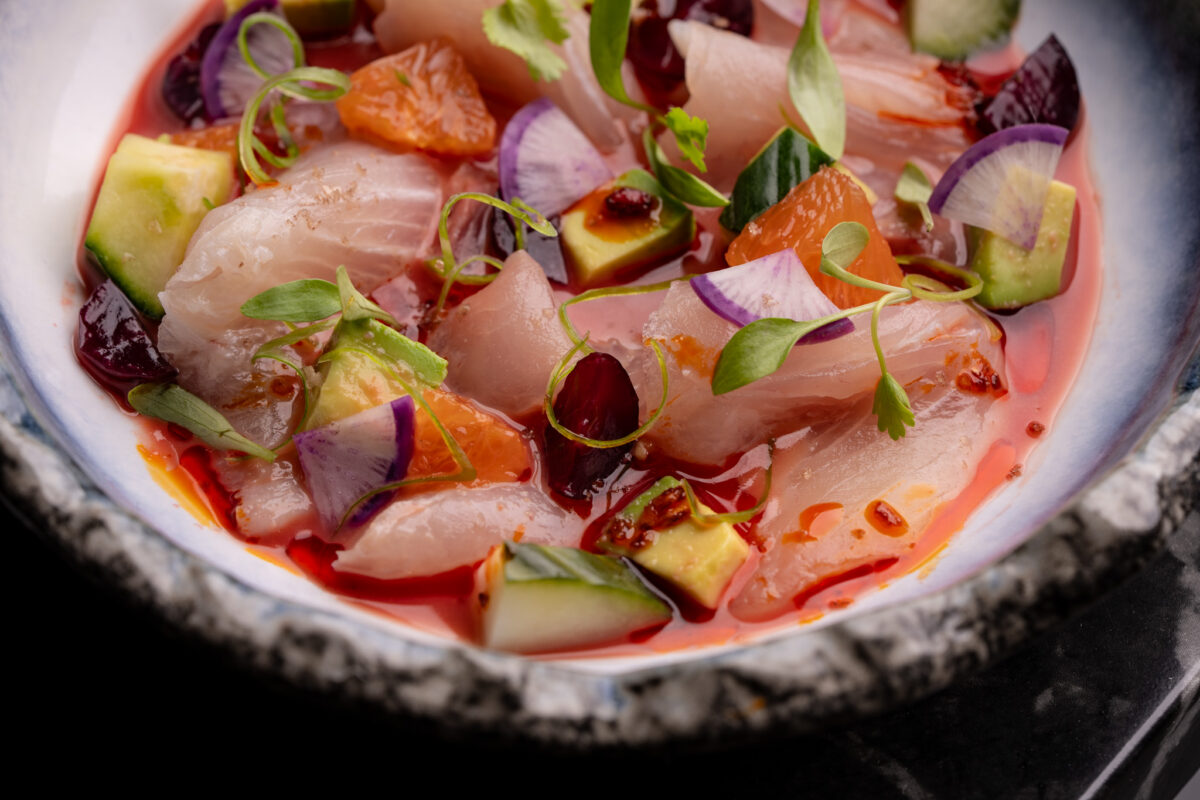

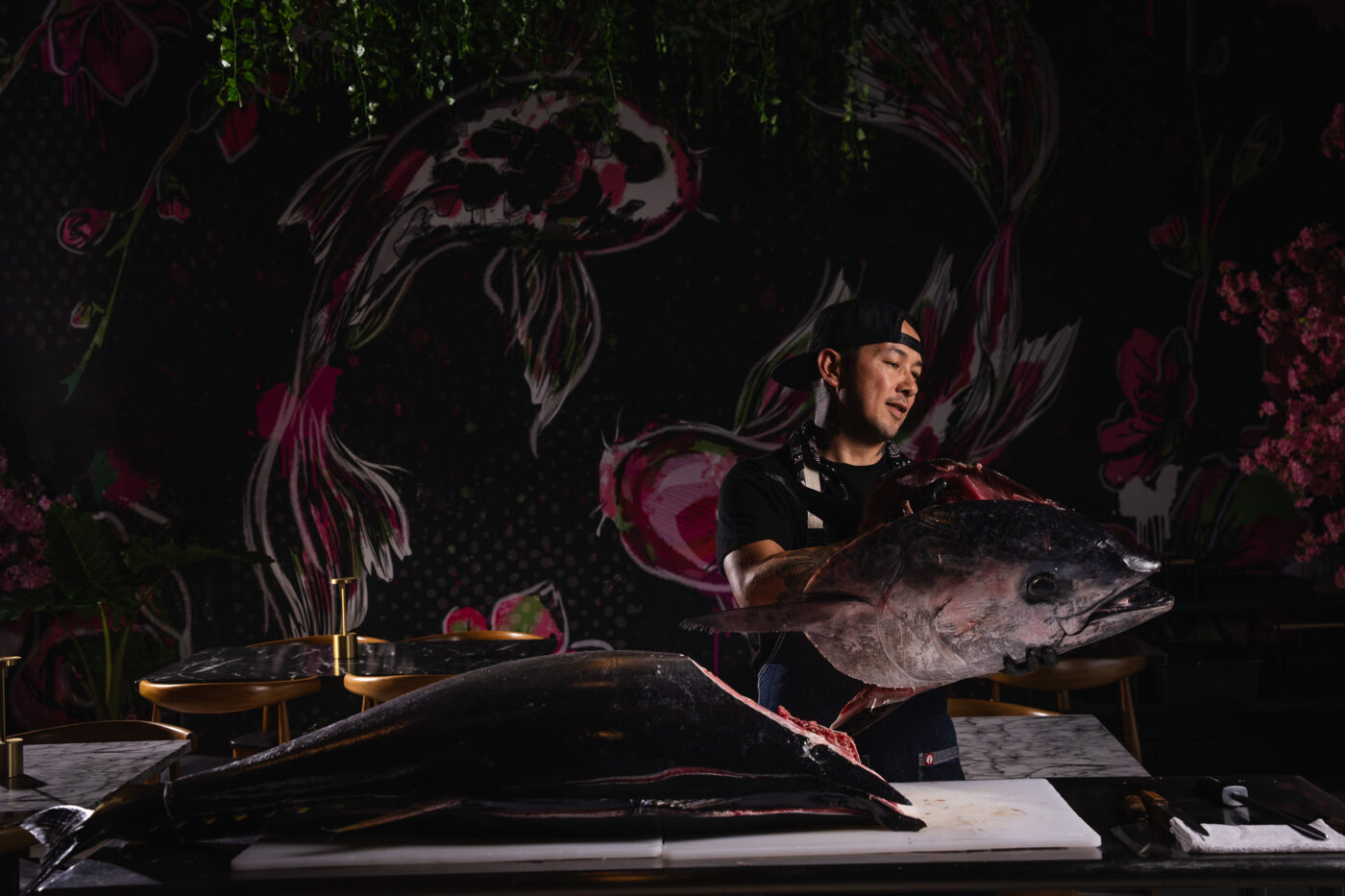
For Chef Marcus Twilegar, the best dishes don’t need to be complicated, they need to have a point of view. Rooted in San Diego and inspired by the ingredients of Southern California, Marcus brings together Japanese-inspired techniques, exceptional seafood, and a deep respect for seasonality to create food that feels both refined and effortless. Be sure to follow his journey on Instagram!
Can you share a bit about your journey into the culinary world and what initially inspired you to become a chef?
Food has always been a big part of how I grew up. In San Diego, food and hospitality were woven into my family life, from cooking Thanksgiving dinner with my grandmother to spending time in my family’s restaurants on my father’s side. Some of my earliest memories are centered around food, family, and the energy of a kitchen.
That connection is what first drew me to cooking. I loved the energy of the kitchen, but even more, I loved seeing how food could bring people together. As I gained experience, I realized being a chef was about more than cooking, it was about creating experiences, building teams, understanding ingredients, and constantly evolving.
Working alongside different chefs and in different kitchens helped shape my own point of view, particularly my passion for seafood, Japanese and French techniques, local sourcing, and food that is thoughtful without being overly complicated.
As Executive Chef at Cherryfish in San Diego, how has your experience shaped your approach to leading your team and crafting your menu?
My experience has taught me that a successful restaurant has to balance creativity, discipline, and a positive culture. The goal is to create a team that is passionate about who we are and what we have to offer. You can have a great idea for a dish, but it still needs to be executable every night, make sense for the restaurant, and ultimately connect with the guest.
At Cherryfish, I try to approach the menu with that balance in mind. The food is influenced by Japanese and French techniques, but it is also very connected to San Diego through its ingredients. We have access to incredible seafood and produce here, so I want the menu to reflect where we are rather than simply recreate something that already exists somewhere else.
From a leadership standpoint, I try to give the team ownership by including them when we develop recipes. I want the cooks and chefs around me to understand why we are doing something, not just how to execute it. When people understand the intention behind the food, they become much more invested in the result.
Our Chef de Cuisine, Jan Tejada, and I have been cooking together for ten years now. Over those years, I’ve learned from him as much as he’s learned from me. That relationship has definitely helped us develop a kitchen culture where we innovate as a team.
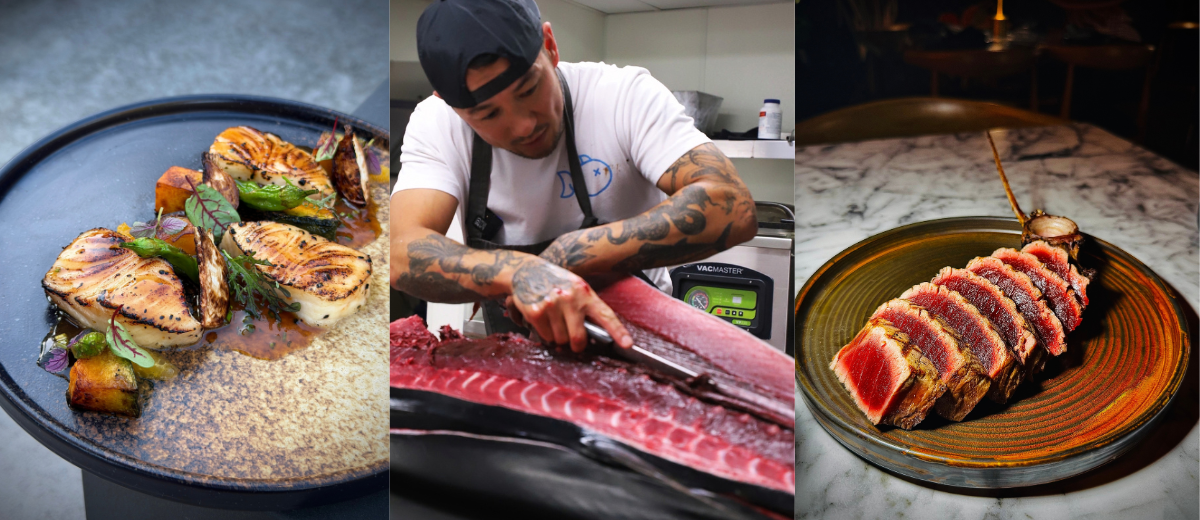
What do you believe are the key qualities of an effective culinary leader in today’s hospitality landscape?
I think being an effective culinary leader today requires a combination of discipline, adaptability, communication, and humility.
The kitchen has traditionally been a very hierarchical environment, but leadership is changing. You still need standards and accountability, but people perform better when they feel respected, challenged, and supported.
A chef also has to be adaptable. Ingredient costs change, guest expectations change, trends change, and teams change. You have to protect your standards without becoming so rigid that you stop evolving.
For me, leadership also means being willing to work alongside the team. You can’t expect people to care more about the restaurant than you do.
How do you foster creativity and innovation in your kitchen while maintaining consistency and quality?
Creativity is encouraged, but it has to have a purpose.
We experiment with ingredients, techniques, preparations, and new ideas, but once something makes it onto the menu, the expectation changes. At that point, the dish needs to be consistent every time it leaves the kitchen.
A lot of that comes down to communication, tasting, repetition, and making sure everyone understands the details that matter.
I also encourage the team to bring ideas to the table. Some of the best dishes or improvements can come from someone noticing something during service or experimenting with an ingredient in a different way.
Innovation doesn’t always mean creating something completely new. Sometimes it means taking something familiar and finding a better or more interesting way to execute it.
Can you describe a pivotal moment in your career that significantly influenced your leadership style?
A major turning point for me was redeveloping a restaurant menu while also rebuilding the kitchen team. That experience taught me how important strong communication is across the entire restaurant. The kitchen, management, and ownership all need to be aligned on the goals of the restaurant.
Earlier in my career, I thought being a strong chef was mostly about producing the best food possible and training your cooks to be strong and consistent. Over time, I realized leadership is also about building a restaurant culture with good energy, keeping the team motivated, and creating food and beverages that everyone is proud to serve.
That experience changed how I communicate with my team and how I approach responsibility in the kitchen. It made me much more aware of how directly the culture you create affects the food, the staff, and ultimately the guest experience.
How does your involvement with Tuna Harbor Dockside Market influence your cooking and connection to local ingredients?
Tuna Harbor Dockside Market is a reminder of why seafood has always felt so personal to me. I grew up in San Diego, and being surrounded by the ocean and our local fishing community has shaped the way I think about food.
When you have the opportunity to meet the fishermen, see what is coming out of the water, and understand where an ingredient comes from, you develop a much deeper respect for it. Instead of starting with a dish and finding the fish to fit it, I like to start with what is available and let the ingredient guide the dish.
That is a big part of what I want Cherryfish to represent. Seafood is at the heart of what we do, and I want our food to feel connected to San Diego. We have access to incredible seafood here, and it is important to me to work with the people who are bringing it to us.
Our uni is a great example. We work with Luke and his father, Peter Halmay, to source incredibly fresh live uni that can arrive at the restaurant less than an hour after coming out of the water. Growing up around seafood, I learned early that freshness can completely change an ingredient. A lot of people think they don’t like uni because they have only experienced it after it has been sitting for several days and developed a strong, fishy flavor. When they try uni that is truly fresh, their whole perception can change. Seeing that reaction from guests is one of the things I love most about cooking seafood in San Diego.
What trends or changes in the culinary industry are you most excited about right now?
One of the things I’m most excited about is seeing chefs become more interested in transparency and regional identity. Guests want to know where ingredients come from, who produced them, and why they are on the menu. I think that pushes restaurants to develop a stronger point of view instead of just following trends.
I’m also interested in the way chefs are combining techniques and influences more naturally. There is less pressure to put food into rigid categories. You can respect Japanese technique while using Southern California ingredients and still allow the dish to reflect your own background and experiences.
I also like seeing a return to simplicity. Innovation doesn’t always mean adding more elements to a plate. Sometimes the most confident thing you can do is start with an exceptional ingredient and not get in its way.
Looking ahead, what are your goals for Cherryfish and your broader culinary work in San Diego?
My goal for Cherryfish is to build a restaurant with a strong and genuine identity within San Diego. I want people to know us for great seafood and Japanese inspired cooking, but just as much for our hospitality, consistency, and the experience we create. I want Cherryfish to be a place where people can come for a special celebration or date night, but also feel comfortable walking in on a regular evening and knowing they will have a great experience.
From a culinary standpoint, I want to continue building relationships with local fishermen and producers and let those relationships influence how the menu evolves. The more we understand our ingredients and where they come from, the more meaningful the food becomes.
Long term, I hope my work can contribute to the growth of San Diego’s food community. There is so much talent, creativity, and incredible product here, and I would love to be part of helping San Diego continue to develop its own identity as a food city.
As someone born and raised in San Diego, how has your upbringing influenced your culinary perspective and connection to the local food scene?
Growing up in San Diego has probably influenced my cooking more than I realized early in my career.
This is a city where you grow up 15 minutes from Mexico, surrounded by seafood, farmers markets, coastal culture, and people from a lot of different backgrounds. Because of that, we have just about every type of cuisine represented here. Those influences naturally become part of your palate.
Being from here also gives me a strong connection to the local food community. I know the neighborhoods, I understand how people in San Diego like to eat, and I’ve watched the restaurant scene evolve significantly.
What I like about cooking here is that San Diego doesn’t have to imitate Los Angeles, San Francisco, New York, or anywhere else. We have our own ingredients, culture, climate, and personality.
At Cherryfish, I want the food to reflect that. The Japanese influence is important, but the restaurant should ultimately feel like something that could only exist in San Diego.